
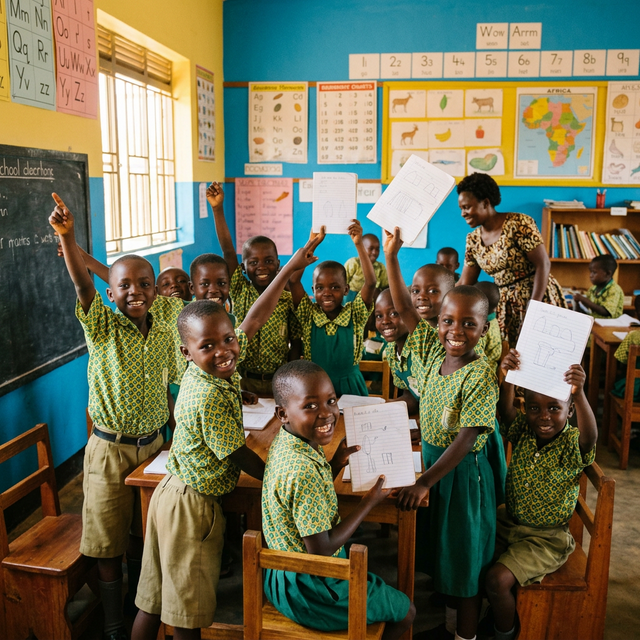
When crisis strikes — whether conflict, flooding, or displacement — education is often the first casualty and the last priority. But for the children affected, learning is their lifeline. It provides structure, normalcy, and hope when everything else has been taken away.
Here are five practical ways individuals, organizations, and communities can support children in emergency learning environments:
Children cannot learn when they don't feel safe. Before curriculum and textbooks, ensure that learning spaces are physically secure, emotionally supportive, and free from harm. This means training teachers in trauma-informed care, establishing clear safeguarding policies, and creating environments where every child feels welcome.
A hungry child cannot learn. School feeding programs — like our Feeding Futures initiative — ensure that children receive at least one nutritious meal daily. This not only supports their physical development but also serves as a powerful incentive for attendance. When parents know their children will eat, they send them to school.
Teachers in emergency settings are heroes. Many work without pay, without materials, and without recognition. Investing in teacher training, providing adequate stipends, and supplying teaching materials can transform the quality of education overnight. Our Adopt a Teacher initiative does exactly this.
Technology can bridge gaps that physical resources cannot. Offline learning apps, solar-powered devices, and mobile-first content can reach children in the most remote settings. Our Karatu Mobile App and Tech Boot Camp are proving that digital tools can be powerful equalizers.
Sustainable education requires community buy-in. Parents, local leaders, and community organizations must be partners in the process — not just recipients. When communities take ownership of their children's education, the outcomes are transformational and lasting.
Every action, no matter how small, contributes to a larger movement. Together, we can ensure that no child's education is permanently interrupted by crisis.